Cox’s Bazar, Bangladesh
Rohingya people have faced state-sponsored systematic persecution in Myanmar for decades. Following the deadly crackdown carried out by the Myanmar military against Rohingya in Rakhine State, more than 770,000 fled to Bangladesh. Now they inhabit the refugee camps in Cox’s Bazar District in south eastern Bangladesh. To this day, the current Myanmar junta still refuses to offer any guarantees of safety or citizenship rights to the Rohingya. The recent Myanmar military coup in February of 2021 has removed any semblance of democracy from the country and has increased the uncertainty about any future return to Rakhine State for Rohingya in Bangladesh. Many Rohingya refugees worry that they will not be able to safely return to their homeland for years or decades. The Rohingya refugee families have no choice; they are forced to remain in the substandard living conditions of the Bangladesh refugee camps.
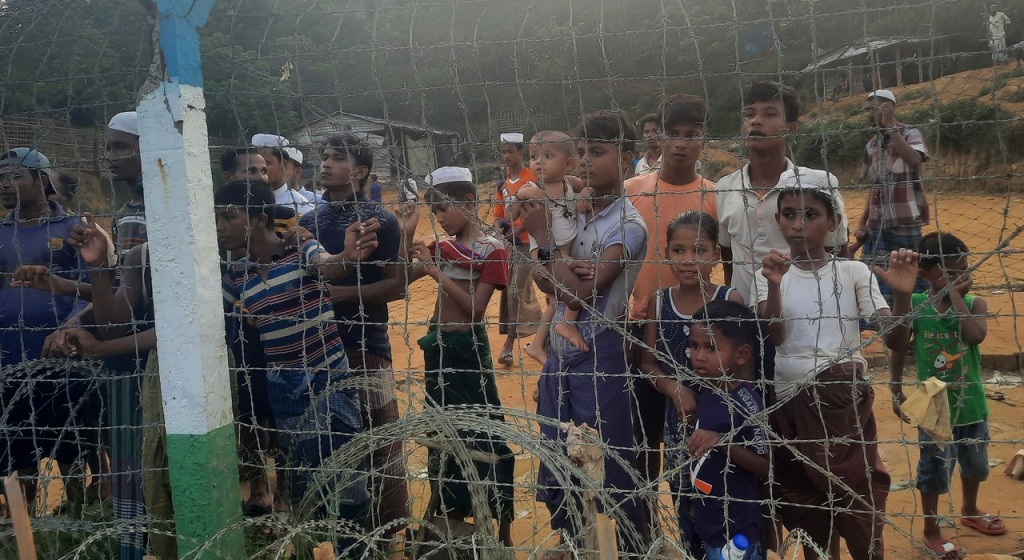
According to the United Nations High Commissioner for Refugees (UNHCR) in Bangladesh, there are more than 920,000 Rohingya refugees living in the camps in Cox’s Bazar District. The majority of the refugee population are children (51%), and there are slightly more women living in the camps (52%) than men (48%). The area where the Rohingya refugees live is divided into 34 camps. In turn, camps are divided into dozens of blocks and sub-blocks, and each block has a Rohingya leader called a majhi. The majhis are appointed by the Bangladesh army and police forces based in the camps. Rohingya families live in cramped tarpaulin shelters, relying on food rations from the World Food Program (WFP). These rations have frequently been reduced since March, 2023. Currently, a Rohingya refugee survives on $8 per month of rations.

There are an estimated 400,000 Rohingya school-aged children who are deprived of formal education in the refugee camps by the Bangladeshi government. Rohingya children are vulnerable and are targeted by gangs and traffickers in the refugee camps. They are the lost generation of the Rohingya community.
“If we lose this new generation, there will be an unavoidable catastrophe within the Rohingya community. Only education can save the new generation in the refugee camps, Cox’s Bazar.”
-Saya Ali Ahmed (a teacher at Community Rebuilding Centre)
Since July 1, 2018, we have been running two community-based basic education high schools in Balukhali and Kutupalong refugee camps in Cox’s Bazar. We hired 20 experienced Rohingya teachers who teach Myanmar curriculum to more than 2,000 Rohingya children every year. We teach children from kindergarten to class 10, and now class 12 following the education reformation of Myanmar Education Ministry. Through the curriculum, we teach Myanmarsar (Burmese), English, Mathematics, Physics, Chemistry, History, Geography and Science.
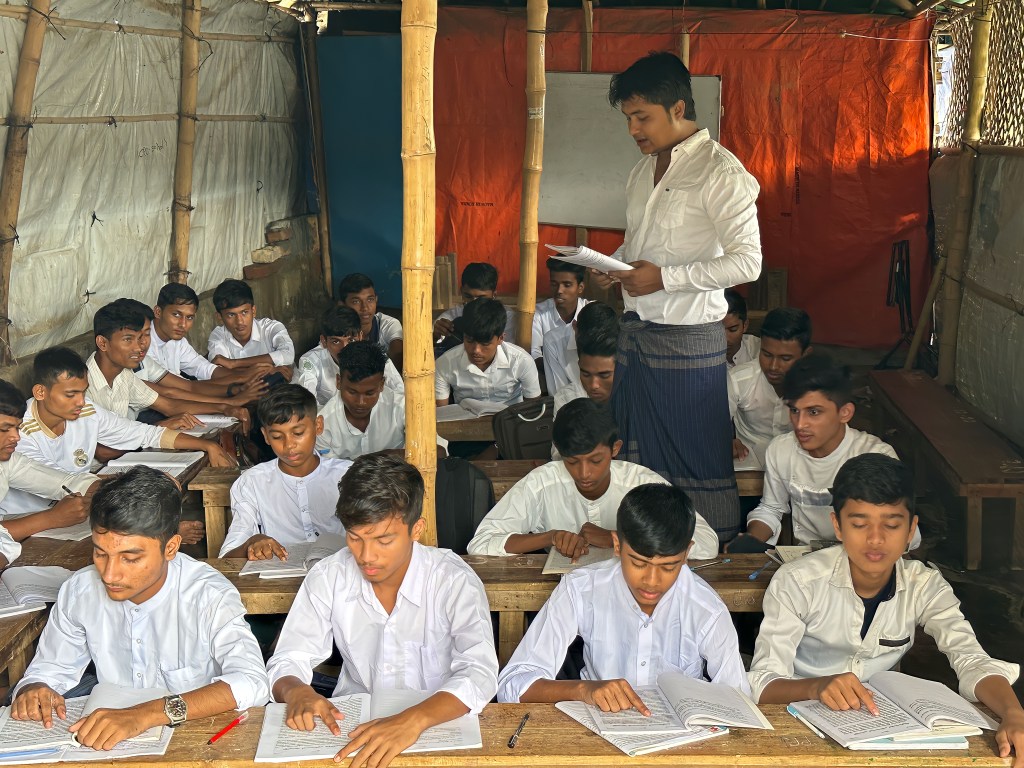
Beyond the school curriculum, every week we provide educational lectures to children at schools on basic health and personal hygiene, good communication and personal behavior, basic Islamic knowledge and motivation sharing stories of the international influential people.

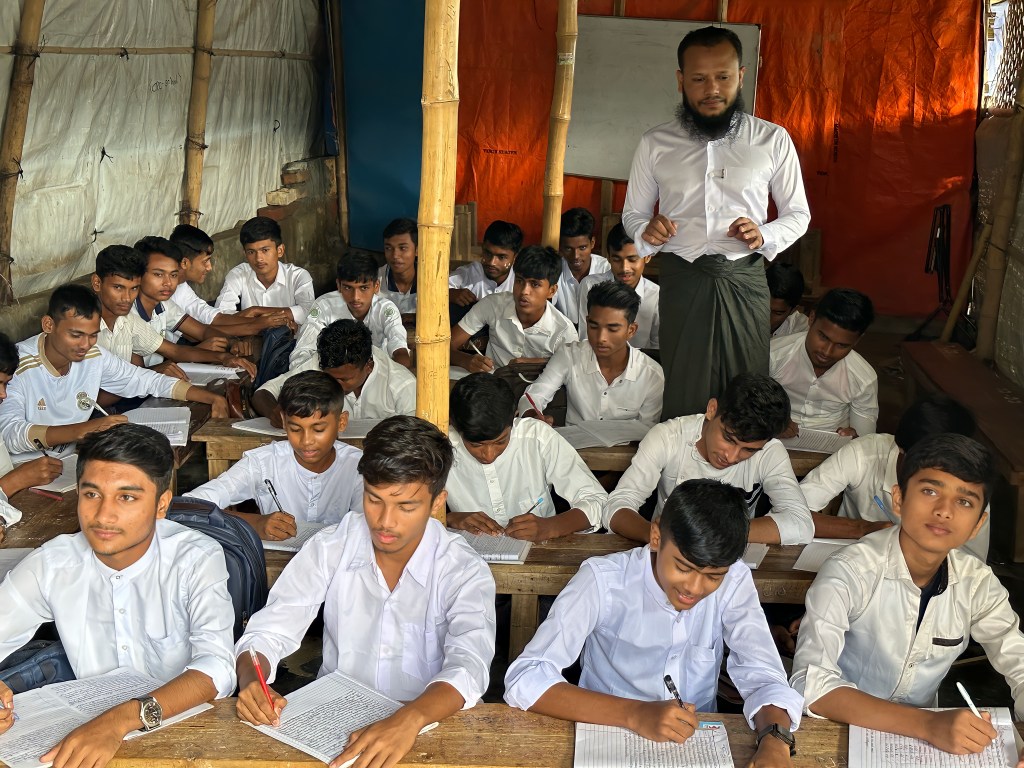
Examination
Teachers hold midterm and final examinations for students in every class at schools. To mark the answer papers of students, we follow the rules and regulations of Myanmar Education Ministry.
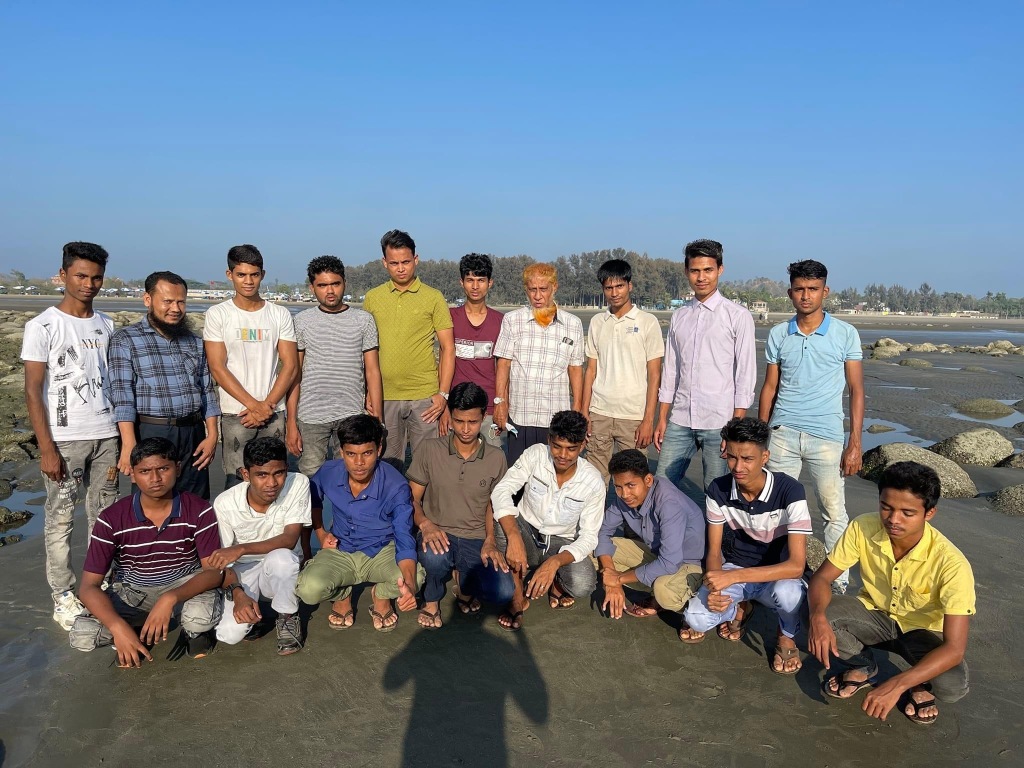
Picnic
After the final examination of the academic year, teachers and students organize a picnic and enjoy a traditional feast together. They play music and sing songs.
Sport
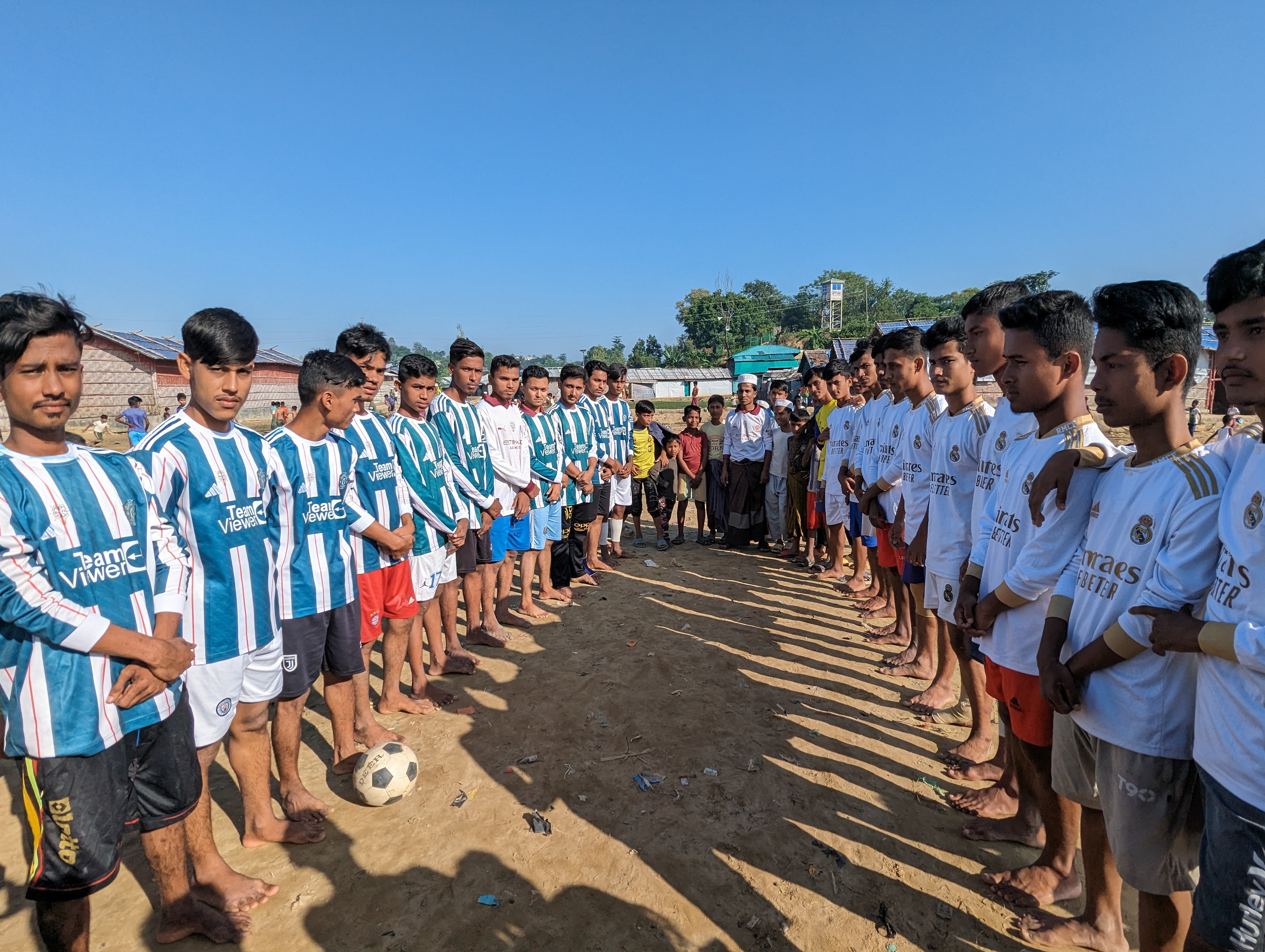
As part of the academics, teachers organize football matches breaking students into different teams. They play football inside the refugee camps.
Award Ceremony
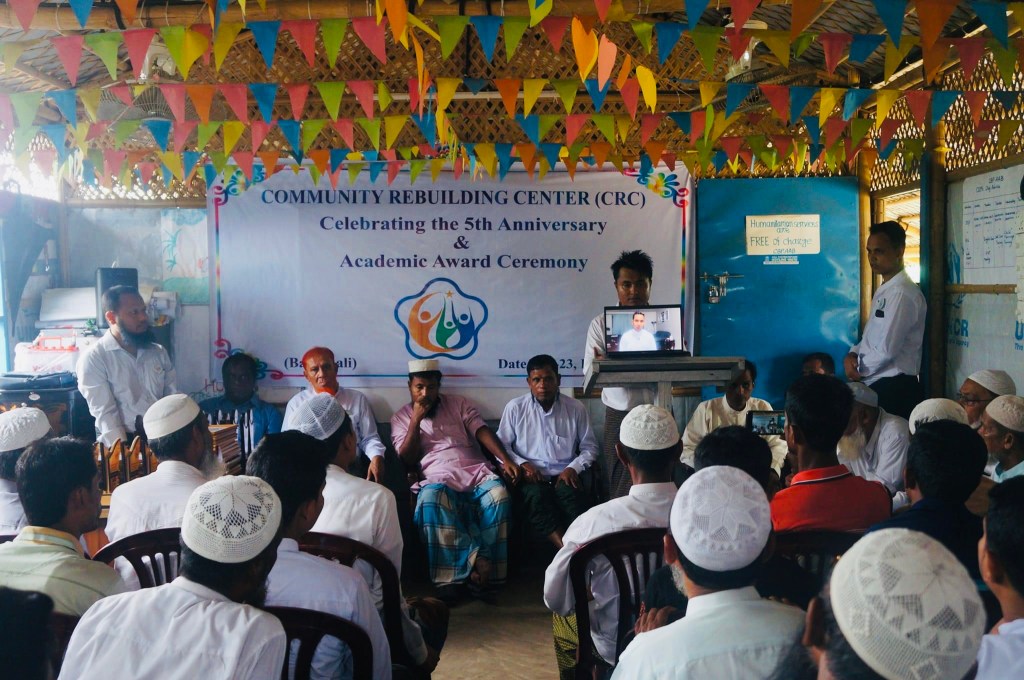
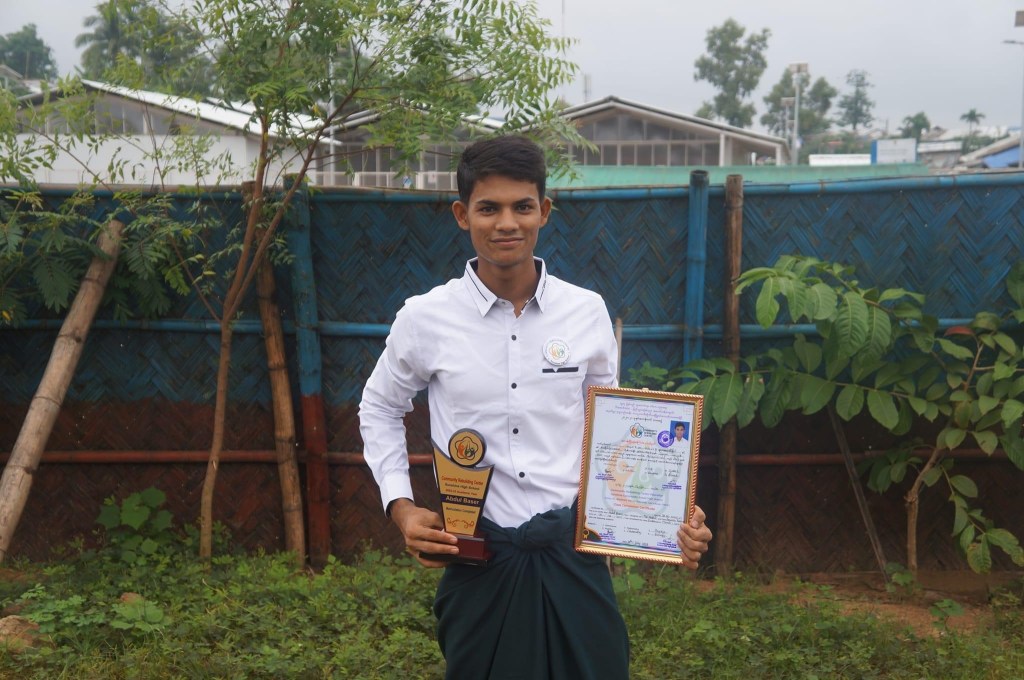
Every year at the end of academic, we hold an award ceremony giving awards to outstanding students. We invite the community leaders and camps-based authorities during the ceremony. We provide refreshment to participants. It is a moment for us to celebrate together with success and happiness in the refugee camps, Cox’s Bazar.
“I was born in Myanmar and am a Burmese national. Learning the Burmese language is crucial for me while residing in the refugee camps. It will eventually help me in returning to my homeland and advocating for our rights in Myanmar.”
-Mohammed Shaker (a student at Community Rebuilding Centre)
 COMMUNITY REBUILDING CENTRE