GIRLS FORWARD
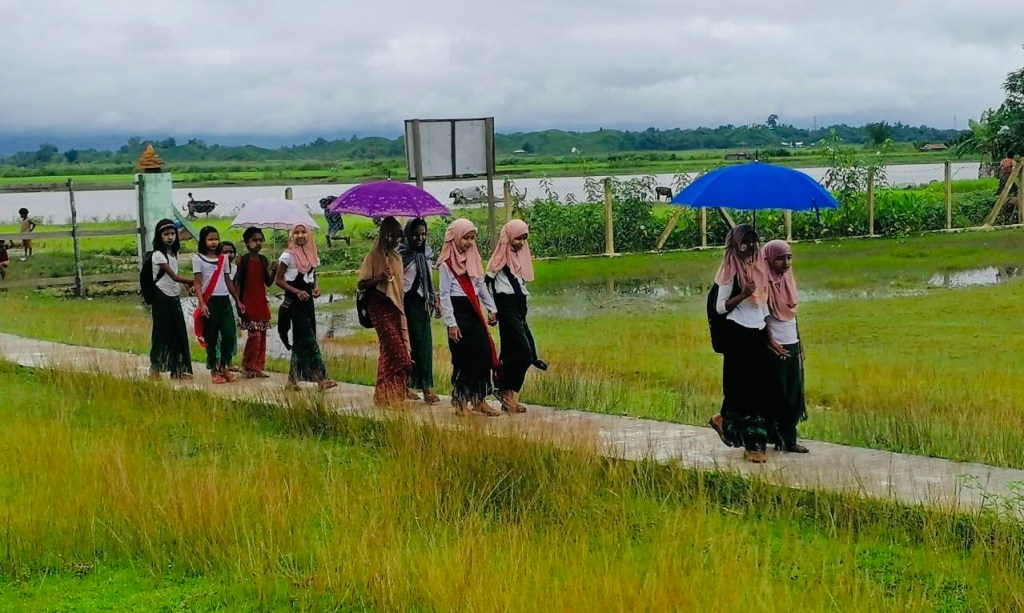
In the Rohingya community, there is a prevailing tendency for Rohingya parents to prioritize boys for education, while girls are often confined to their homes. This is particularly pronounched in remote areas of Arakan, today’s Rakhine State, where it remains culturally taboo for girls to pursue schooling. Reports from Human Rights Watch showed that Rohingya girls face the risk of being deprived of education due to a combination of policy barriers and entrenched cultural norms in the community. In the refugee camps in Cox’s Bazar, more than 400,000 Rohingya school-aged children are denied formal education, with more than 250,000 of them being girls. In the Sittwe IDP camps, over 97,484 Rohingya individuals have been concentrated since the outbreak of violence in 2012, living in dire conditions akin a modern-day prison camp. The situation is particularly distressing for Rohingya children, especially girls in these IDP camps, as they are prevented from accessing to school outside, and are in urgent need of support.
Our Goals
- To provide mental and financial support to underprivileged Rohingya girls in their pursuit of education
- To provide positive parenting sessions that address the barriers (to girls’ education) such as financial difficulties, early marriage, cultural barriers
- To educate and empower Rohingya girls and decrease child labour, early marriage and gender-based violence in the Rohingya community
Buthidaung Township, Rakhine State, Myanmar
In June, 2021, our team conducted a survey to understand the situation of Rohingya education in four villages: Sein Hnyin Pyin, Gudar Pyin, Phoe Kaung Chaung and Tha Peik Taung in Buthidaung Township, Rakhine State. We identified that more than 90% of under-18 Rohingya girls do not go to schools while 30% of Rohingya boys go to schools. Most of those 10% of Rohingya girls who go to schools, drop off in the secondary classes for several reasons including financial and cultural barriers.

Since 2021, we have been supporting 22 Rohingya girls accessing them at the government-run school in a remote area in Buthidaung Township, Rakhine State, Myanmar. They are those girls who were not able to go to school because of financial and cultural barriers. We provide them school kits which include a bag, school uniform, books and textbooks, pen, pencils, etc. We recruited Educators and Coordinators. Every day after the school hours, Educators provide a tuition class to the girls assisting them in school homework and additional classes.
“I feel that my parents prioritize my brothers over me due to my gender, despite my unique talents and capabilities. I aspire to become an activist like Wai Wai Nu, advocating for women’s rights and empowering women.”
-Kismotara (a girl from Buthidaung Township)
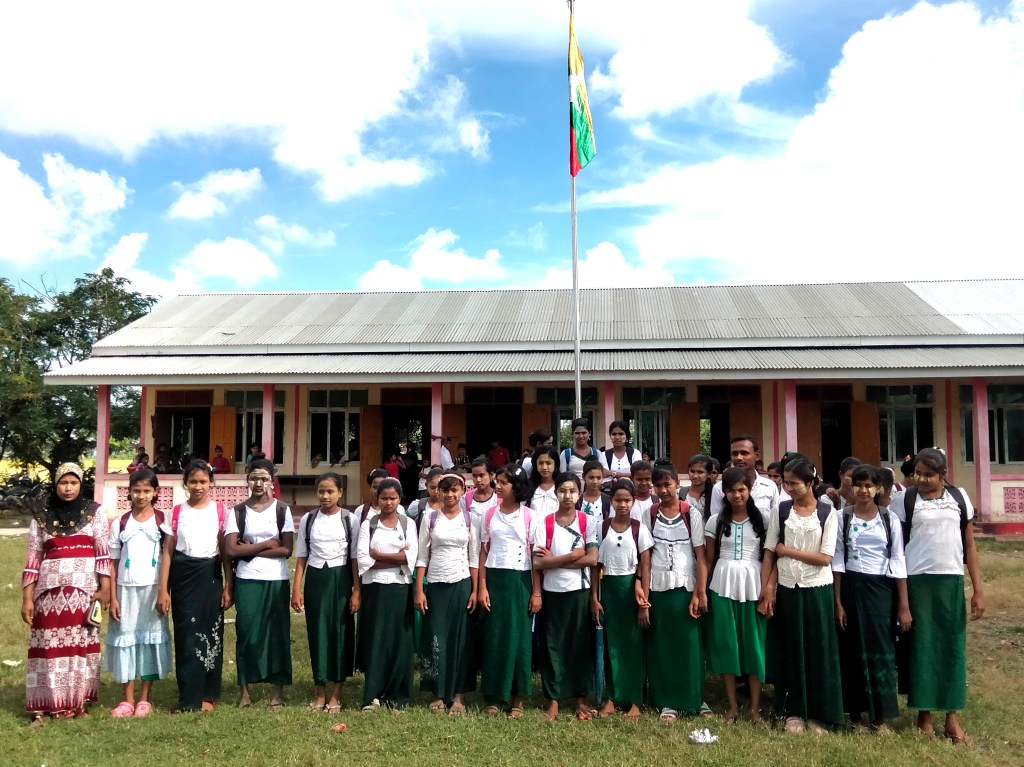
Lecture and Creative Workshop
They also provide weekly lectures to girls on good communication, good personal behaviour and personal hygiene and conduct creative workshop to the girls on henna and traditional Thanaka_ make-up application, knitting and threading and physical exercise. The teachers also administer monthly, mid-term and final exams to the girls in tuition class.
Sittwe IDP Camps, Rakhine State, Myanmar
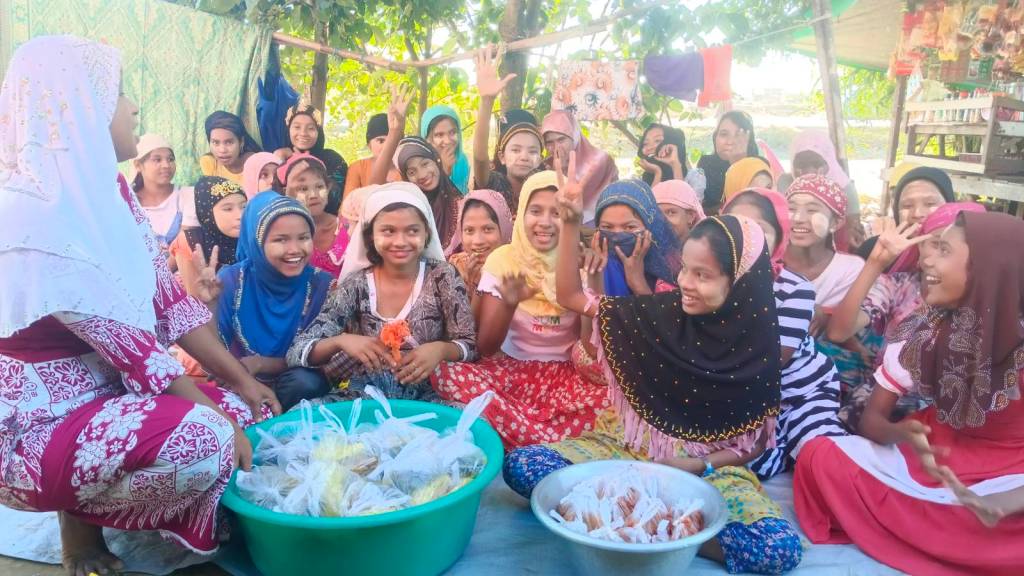
In April, 2023, we extended our program in Internally Displaced Persons (IDP) camps in Sittwe, Rakhine State, Myanmar. Currently, we are supporting 42 young Rohingya girls to attend the government-run school and tuition class in their area.
Positive Parenting Session
Parenting has two sides_ good parenting and bad parenting. In a community like Rohingya that has been rooted with patriarchy and cultural beliefs, good or positive parenting is crucial to make a change in the community. In this pursuit, we provide positive parenting session to Rohingya parents and influential community members such as imams, village chairmen, traditional birth attendants and seniors. The sessions focus on gender-based violence, gender discrimination, empowerment of women and girls, child labour and child marriage. Every week we provide a session, and two sessions with men and two sessions with women per month.
“Previously, I was unaware of the rights of girls and women. Attending the positive parenting sessions enlightened me about the significance of women’s role in society. Empowering women necessitates educating our daughters with the same attention as we do our sons. This is of utmost importance for our community.”
-Abul Hashim (a Rohingya father from Sittwe IDP Camp)
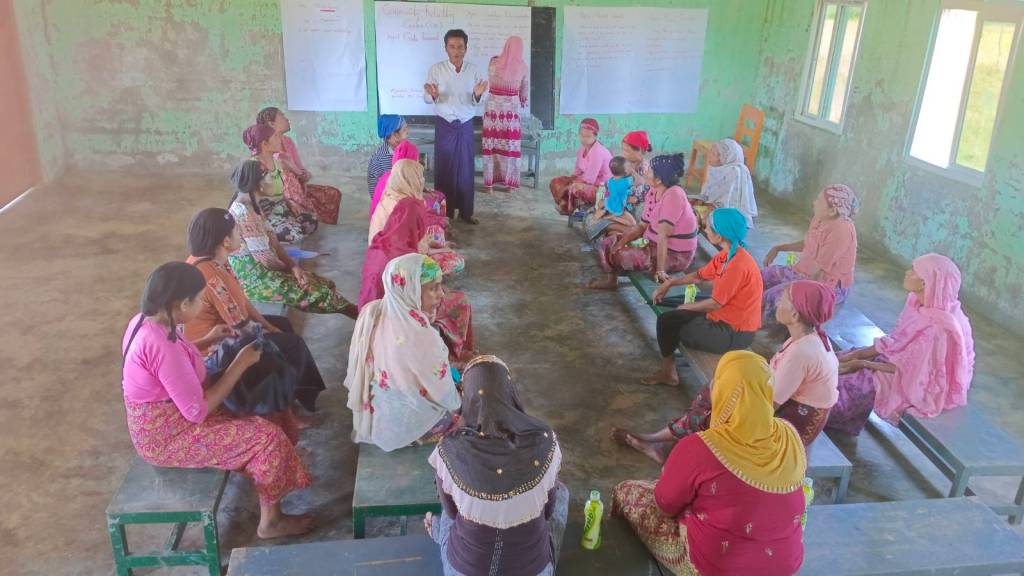
During the sessions, we identified that Rohingya parents are interested in supporting their girls to go to school. They asked questions and engaged each other during discussion . After sessions, we discovered that Rohingya fathers accompanied their girls going to school and tuition class. We also identified that Rohingya men and women started discussing girls’ education with each other while sitting at shops or at community gatherings.

Rohingya Refugee Camps, Cox’s Bazar, Bangladesh
In 2021, we supported 10 young Rohingya girls in the refugee camps, Cox’s Bazar, preparing for the entrance test of secondary high school program which was newly initiated by Asian University for Women (AUW) in Chittagong, Bangladesh. The university provides full scholarships for Rohingya refugee girls and hosts the selected candidates in the program. Six out of ten of our girls were selected in the program and now they are studying their high school in the university.
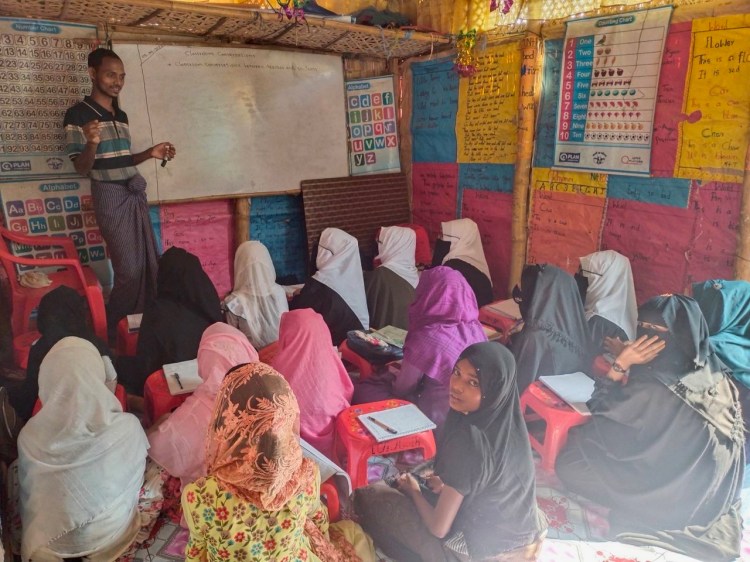
This year, we are supporting 22 young Rohingya girls in preparing for the test of the upcoming admission at Asian University for Women.
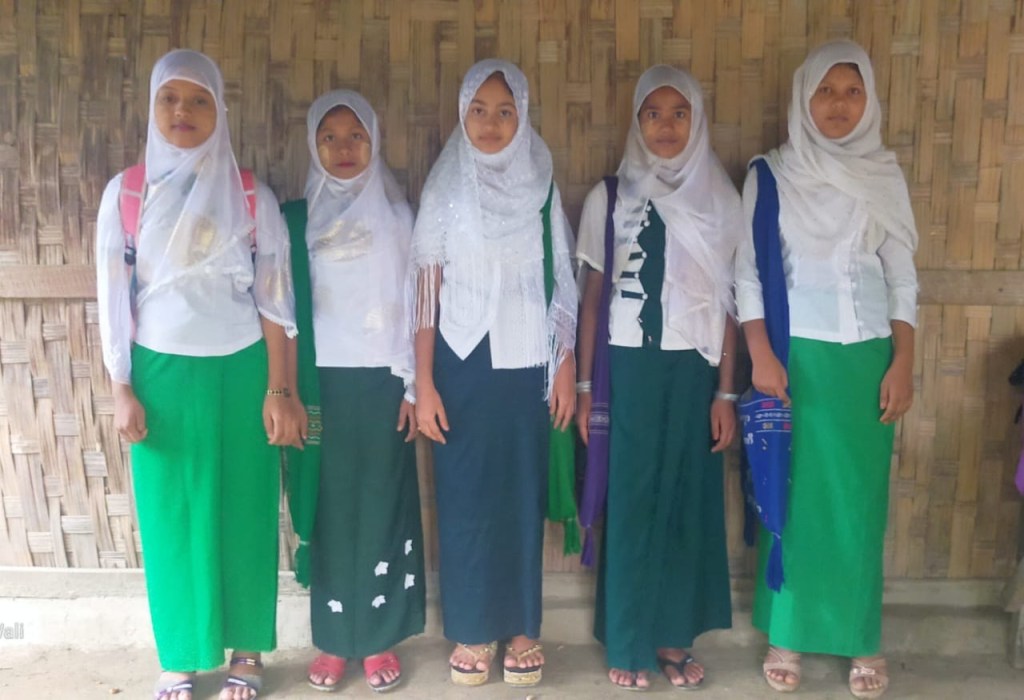
“I completed my secondary school in Myanmar. I have been residing in the refugee camp in Cox’s Bazar for six years. As a refugee, I am not permitted to attend Bangladeshi government-run schools or universities. My aspiration is to pursue higher education at a university and became a doctor in order to serve my community, with a special focus on assisting children and women.”
-Sumaiya Bibi (a girl from Kutupalong refugee camp)
 COMMUNITY REBUILDING CENTRE